A Matchday Scrapbook for One Season
A matchday scrapbook for one season turns a few programmes, brief notes and remembered moments into a personal record without collecting every match.
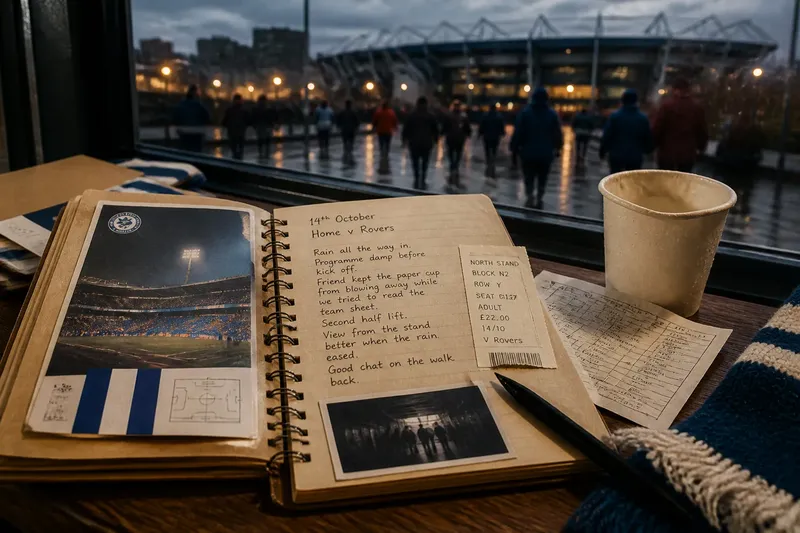
A matchday scrapbook for one season needs only a few programmes, brief notes and moments you still remember on the journey home. The point is not to document every fixture; it is to choose the details that make this particular season feel like yours.
A folded team sheet, a ticket stub and a sentence about the rain can carry more of a day than a complete run of match reports. Set a modest rhythm at the start of the season, then let the pages grow around the matches that leave something worth keeping.
What belongs in a season scrapbook?
Think of the scrapbook as a small, selective record, not an archive. It might hold a programme from a match you anticipated, a note about a familiar pre-match routine, and a memory of something unexpected: a late change in the weather, a neighbour’s running commentary or the silence after a chance went wide.
Keep the materials tied to your own experience. A programme can show how the occasion was presented; your note can record what you noticed that the printed page could not. A ticket or paper receipt may add a useful trace, but none of these is essential.
Choose a container before the season begins: a notebook with pockets, a ring binder with paper sleeves, or a plain folder. A simple place to put things reduces the temptation to preserve every scrap just because it is available.
- Keep: one programme or match document that marks a memorable occasion.
- Keep: a short note in your own words, written soon after the match.
- Keep: one small paper item if it adds context, such as a ticket or a printed team sheet.
- Skip: duplicate copies that tell you nothing new.
- Skip: material kept only from a sense that a scrapbook ought to be complete.
For anything with special handling or storage requirements, follow the item’s own guidance. For ordinary paper, keeping it dry, flat and out of direct sunlight is a sensible starting point.
How can you keep the routine light?
Give the scrapbook three small moments in the season: a brief setup before the first match, a short note after selected games, and a gentle review when the season ends. There is no need to make a page on the day itself. If the journey home is busy, write a few words on your phone and transfer them later, or leave the memory alone until it returns naturally.
Before the opening fixture, write the season’s name or team on the first page and leave space for a few entries. Add a line about what you hope to remember—not a prediction of results, but something personal, such as who you usually travel with or which part of matchday you look forward to.
During the season, use a simple prompt after a match you want to keep: What happened that I’ll still remember? Answer in one or two sentences. You might note a goal, but you might instead remember the bus ride, a familiar view from the stand or the conversation that followed.
Every few weeks, look back at the items already gathered. If several pages describe the same kind of moment, choose a different detail for the next entry. That small change gives the record texture without turning it into an assignment.
What should you choose to keep?
Selection can follow a few useful questions. Does this item bring back a particular match? Does it add something your words cannot? Would you miss it if it were gone? If the answer is no each time, it can remain outside the scrapbook.
Programmes are often easy anchors because they preserve a match’s printed framing: the names, notices and small details around the event. Still, a programme from every game may become a stack rather than a story. Keep one when its cover, contents or place in the season means something to you.
Notes can do the work a printed object cannot. Record a sound, a phrase you heard, the view from your seat, or the moment you realised the match had changed mood. Specific details are more evocative than a verdict such as “great game” or “poor performance”.
Imagine you attend a rainy home match with a friend, and the programme gets damp on the walk in. You decide not to save the damaged copy; on the journey back, you write that your friend kept the paper cup from blowing away while you both tried to read the team sheet. The expected result is a page that recalls the shared moment without requiring a pristine souvenir.
How do you handle gaps and changes?
A missed match does not create a debt. If you were away, ill or simply unable to go, leave the page blank or add a brief note about why that fixture mattered from a distance. A season scrapbook can include absences, but it does not need to explain them all.
Plans can change, too. Perhaps you start by keeping programmes and later realise that your strongest memories come from away-day journeys or conversations after the final whistle. Let the scrapbook follow what you actually care about rather than forcing every entry into the same format.
Some matches blur together. Do not fill the gap with invented detail or a summary copied from elsewhere. If you want context, write down what you can verify from the programme or an official fixture record, and separate it clearly from what you remember.
It is also fine to keep a note without an object. A scrap of paper is not more meaningful simply because it can be mounted or filed. A sentence in the notebook can stand on its own.
Which details are worth recording?
Use these questions when you want a prompt, not a form to complete. Each can lead to a short entry, and you can ignore any that do not fit the match.
What should I write if I cannot remember the score?
Write what remains clear: the weather, where you sat, a conversation or the feeling as you left. If you later want the score, check a reliable fixture record and label it as added context rather than a memory.
Should I keep a programme from every match?
No. Choose programmes that carry a particular association or help you recall a day. If you want a record of the full fixture list, a separate note is less bulky than keeping every printed item.
How can I include a match I watched away from the ground?
Record the setting that made it yours: the kitchen table, a crowded pub, or a message exchange with someone watching elsewhere. A brief note can preserve the social side without pretending it was the same experience as attending.
What if my notes feel too ordinary?
Ordinary details often become useful cues: the train you nearly missed, the familiar snack, or the coat you wore through the rain. Keep the detail if it brings the day back to you; it does not need to sound impressive.
How can you shape the scrapbook at season’s end?
When the final match has passed, set aside a quiet moment to review what you collected. Put the items in an order that makes sense to you: by fixture, by journey, or by the moments that stayed vivid. A simple order is enough; the book does not need a polished design.
Add a closing note about what the season came to mean. It might mention a new routine, a person you saw regularly, or a match whose importance changed with time. Keep it grounded in what you can recall, rather than trying to write a verdict on the whole season.
Then remove anything that feels like clutter. You are allowed to pare back the pages, leave a blank space, or stop with an unfinished entry. A matchday scrapbook for one season is most useful when it preserves chosen memories in a form you will actually want to open again.
Store the finished scrapbook somewhere you can reach it, rather than hiding it behind a box of things you never revisit. The lasting value is not in the quantity of paper, but in having a few precise reminders ready when a familiar matchday detail comes back to mind.