The Story Behind the Scorecard
A scorecard turns a match into a compact record. Learn how its layout captures the sequence, decisions and details that make the contest easy to revisit.
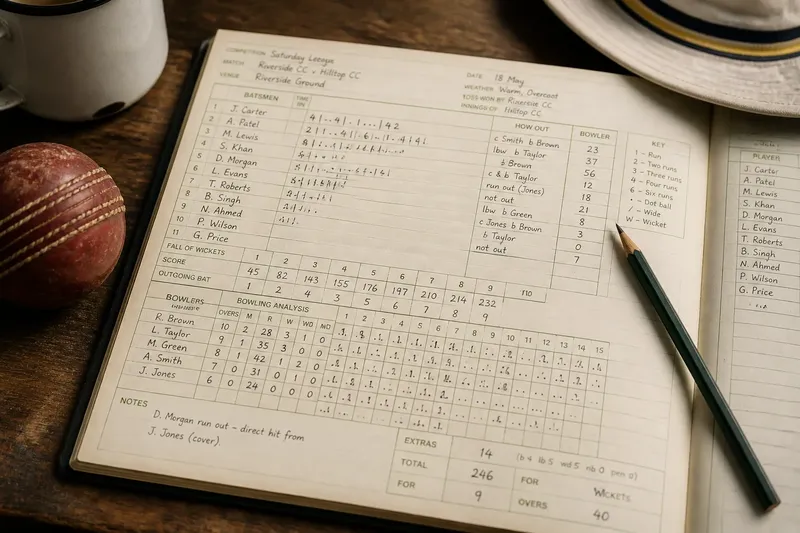
A scorecard preserves the match in the order it happened, not just the result printed at the end. To understand the story behind a scorecard, follow its marks from the first entry to the final tally: its layout makes a contest portable, readable and open to later recollection.
What should you notice before reading the marks?
Start by identifying the sport and the kind of scorecard in front of you. A cricket card may divide an innings into batters, bowlers and fall of wickets; a baseball card often gives each player a line of innings-by-innings figures. The grid is not decoration. It tells you what the record considers worth keeping.
Look for a heading with the teams, venue, date or competition. These details place the contest, while the names and columns show whose actions will be tracked. If a card has been filled in by hand, the writer may have added a team name or match detail that the printed form left blank.
Before interpreting a symbol, check for a key or a note. Scorekeeping marks vary by sport and sometimes by local convention, so a neat-looking slash or letter is not self-explanatory. Where a mark’s meaning depends on the sport’s rules or a particular card’s instructions, check the relevant rulebook or guidance rather than guessing.
Read the headings first, then the entries. That small pause makes the rest of the card much easier to follow.
How does the layout turn events into a sequence?
A scorecard’s most useful feature is its arrangement of time. Rather than describing every pass, delivery or exchange, it gives the reader a set of places to record selected events as they unfold. A completed grid can show a change in momentum without needing a paragraph for every moment.
In cricket, a batter’s row may record runs, balls faced, boundaries and how the innings ended, while a bowler’s figures occupy a separate section. The two views describe the same innings from different positions. One shows how individual batters contributed; the other makes the bowling spell legible.
In baseball, innings columns offer a compact view of the score as it develops. A line of runs, hits and errors can distinguish a close contest from one shaped by a brief burst of scoring. The card does not preserve every pitch, but it gives a reader a route through the game’s visible turning points.
Notice what the form leaves out as well as what it includes. A scorecard can hold names, totals and selected events; it cannot fully contain the weather, the crowd’s reaction or the feeling of a tense pause. That limit is part of its purpose: it is a record to revisit, not a substitute for the match.
How do you make a scorecard that can be read later?
If you are keeping score, fill in the identifying details before play begins. Add the teams and player names, then check that the columns match the sport and format. A blank name or unclear heading can make a carefully kept record harder to understand afterwards.
- Set up the card. Write the match details and the names in the spaces provided. If the form has separate areas for innings, periods or players, confirm which side or team each area represents.
- Keep the notation consistent. Use the printed key where one exists, and avoid switching between personal shorthand and the card’s symbols. If you need an extra mark, add a brief explanation in a notes area.
- Record events as they happen. Enter the action in its intended row or column while the sequence is clear. If you miss an entry, leave the record legible and make a correction that does not obscure the original information.
- Check totals at natural pauses. Compare the entries with the score displayed or announced, and resolve any mismatch while the relevant events are still fresh. A quick check can reveal a missed mark before it affects later entries.
- Complete the closing details. Add the final score and any result information the card asks for. Make sure the teams, names and totals can be read without relying on your memory of the day.
Say you are keeping a cricket card at a local match and realise that one batter’s dismissal mark is unclear. Rather than filling the space with a guess, you could check the scorer’s record or ask someone who saw the decision, then add a short note that distinguishes the confirmed detail from your uncertainty. Later, a reader could follow the innings without mistaking a guess for a fact.
What can the reader recover from a completed card?
Begin with the final result, then work backwards through the entries that explain it. A total alone tells you who finished ahead; the sequence can show whether the contest stayed close, shifted sharply or depended on one sustained contribution. The card gives shape to the result by showing how it accumulated.
Compare related areas rather than reading each in isolation. In cricket, a batter’s score can be considered beside the bowling figures and the order in which wickets fell. In baseball, the innings pattern can be read alongside player lines and the final totals. Each comparison adds context without pretending that the sheet records every tactical choice.
Names matter, too. A scorecard turns a collective match into a record of individual participation: who batted, bowled, played an inning or entered a particular part of the contest. Even an ordinary line can preserve that someone was there and had a place in the game.
Leave room for ambiguity when the card is incomplete or untidy. A blank cell may mean an event did not occur, that it was not recorded, or simply that the scorer missed it. Treat the sheet as evidence of what was entered, not as proof that every unmarked event never happened.
How can a paper or digital card remain useful?
A paper card benefits from clear handwriting and a place where it will not be smudged or folded through the entries. Once the match is over, keep it with a note identifying the competition or occasion if those details are not already printed. That modest context can help the record make sense after the day itself has faded.
A digital scorecard offers a different kind of legibility. It may make searching names or comparing entries easier, while a paper original can carry the scorer’s handwriting and visible corrections. Neither format captures the whole match; choose the one that suits how you want to read, share or keep the record.
If you copy a card into a digital file, preserve its structure rather than reducing it to a final score. Keep the headings, player names and sequence of entries, and note any uncertain mark. A tidy transcription is useful only if it retains the clues that let another person interpret it.
What questions do readers ask about scorecards?
Why is a scorecard more than a final score?
The final score records the outcome, while the rest of the card shows how the contest reached it. Player lines and innings or period entries preserve selected contributions and changes in the scoring pattern.
Can one scorecard tell the whole story of a match?
No: it records the events its layout and scorer are equipped to capture. Tactics, atmosphere and unrecorded incidents may sit outside the grid, so treat the card as a compact account rather than a complete narrative.
What should you do with an unclear symbol?
Look for the card’s own key and compare the mark with the surrounding entries. If its meaning remains uncertain, leave it identified as unclear instead of assigning it a confident interpretation.
Why do scorecards use different layouts?
Different sports organise contests in different ways, so their cards follow the units that matter: innings, players, deliveries, periods or other events. The layout is a practical record of how that game is counted and remembered.
How does a scorecard become a keepsake?
A scorecard can outlast the immediate business of keeping score because its grid holds a small, ordered trace of the occasion. The names, marks and corrections bring a reader back to the structure of the contest, even when the finer details have slipped from memory.
Keep the card with enough context to identify the match, and resist tidying away every irregular mark. A correction or brief note can explain how the record was made. The story behind the scorecard lies in that balance: a compact account precise enough to revisit, with its limits still visible.
When you next come across a filled-in card, read its headings before its totals. The layout will show you what the scorer chose to preserve—and offer a sensible starting point for remembering the match.