The Opening Ceremony Is Not the Match
The opening ceremony sets a mood, not a forecast. Learn how to read its spectacle, choose what to notice, and keep it separate from the contest.
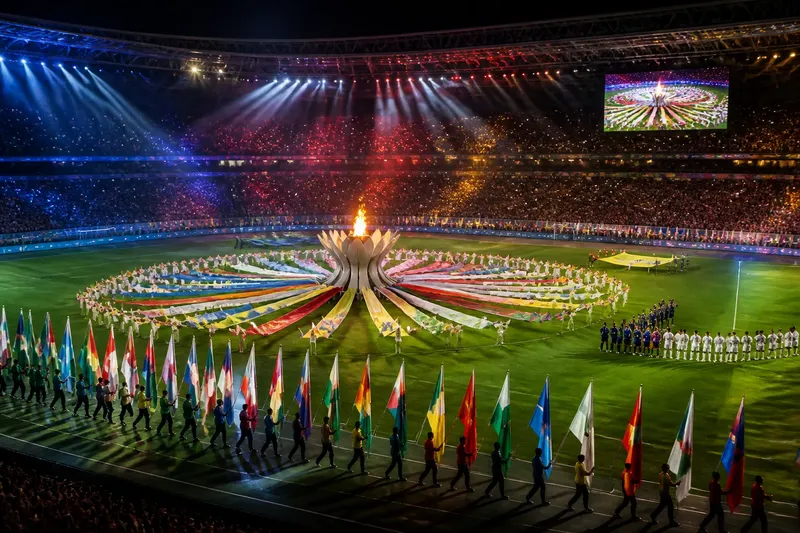
An opening ceremony can make a stadium feel charged before a ball is kicked, but it cannot tell you how the match will unfold. Treating the spectacle as a frame rather than a forecast lets you enjoy the performance without confusing its emotional story with the contest that follows.
What is an opening ceremony meant to do?
A ceremony gathers attention around a shared occasion. Flags, music, choreography, a torch, a marching team or a carefully timed entrance can make the crowd feel that ordinary matchday has briefly become an event in its own right.
Its work is expressive, not tactical. A sequence might suggest welcome, civic pride, remembrance or celebration, but those meanings belong to the staging. They do not reveal which side will control possession, how a coach will adapt, or whether the first half will be tense or open.
That distinction is useful even when the show includes the teams. A formation of players beneath a banner is part of the ceremony until the rules of the contest take over; the same people then become competitors, subject to the pace and uncertainty of the game.
Which kind of spectator are you today?
There is no single correct way to watch the minutes before play. Choose what suits your reason for being there, then let the match offer its own evidence.
- If you came for the performance: Watch how the music, movement, lighting and use of space create a mood. Notice how the stadium changes from a place of waiting into a stage, without asking the choreography to predict the result.
- If you are there for the teams: Treat the ceremony as an introduction, then shift attention when players begin their match preparations. Warm-up routines and the referee’s signals are closer to the contest, though neither tells the whole story.
- If you are attending with children or first-time visitors: Use the spectacle as an easy way into the occasion. Point out the colours, instruments, costumes or symbols, and explain that the game will have its own rules and surprises after the performance ends.
- If you are watching for a tradition or tribute: Focus on the particular gesture and what it asks the audience to remember. A shared pause or a ceremonial object may carry more meaning than the scale of the production.
- If you are watching remotely: Decide whether the ceremony matters to you before leaving it on in the background. A broadcast may show close-ups and commentary that help with context, while a live view may make the crowd’s response more legible.
For a family at a match, the practical choice might be to watch the flag procession together, then use the walk to the seats or the final warm-up to talk about the teams. That gives the ceremony its own moment without asking a child to treat it as a clue to the score.
How can a ceremony set a mood without explaining the game?
Spectacle works through sensory cues. A drumbeat can make a pause feel ceremonial; a field of colour can give the occasion a visual identity; a sudden quiet can focus attention. These cues influence how a person experiences the moment, not what the players will do with the ball.
The difference is between atmosphere and information. A rising musical passage may make the entrance feel triumphant, but a team can still begin cautiously. A sombre tribute can create a reflective crowd, yet the match may quickly become noisy and combative. The emotional register can change as soon as play begins.
Sometimes the contrast is the point. The crowd may move from standing still for a formal procession to reacting to a quick, messy passage of play. The ceremony has prepared people to share an occasion; the match gives them an unpredictable event to respond to.
What should you notice in the staging?
If you want to watch closely, look at the choices that make the event feel specific rather than simply large. Consider which details are visible to people in the upper stands, which depend on a screen, and how the performers use the playing surface without obscuring the match’s practical needs.
- Sound: Notice whether live instruments, recorded music or crowd noise carries the scene. Sound can gather attention, but it may reach different parts of a venue unevenly.
- Movement: Watch how performers enter and leave, and whether the central action is easy to follow from a distance.
- Symbols: Look for colours, flags, objects or gestures that connect the ceremony to the teams, place or occasion.
- Timing: Notice where the ceremony creates a pause and where it hands attention back to the players.
- Audience response: The crowd may clap, sing, stand or remain quiet. Its reaction is part of the spectacle, but it is not a reliable reading of how the match will go.
These details help you describe what the ceremony actually did. “The procession made the teams visible to the whole ground” is more precise than saying it showed which side looked ready to win.
Questions spectators often ask about opening ceremonies?
Does an opening ceremony predict the result?
No. It can create expectation or confidence in the stands, but the performance is not evidence about the teams’ decisions or ability during play. Watch the match itself for signs of how the contest is developing.
Why do ceremonies use music and flags?
Music and flags make an occasion easier to recognise and share across a large crowd. They can signal celebration, welcome or collective identity without needing to explain the rules of the sport.
Should I stay for the whole ceremony?
That depends on what you came to see and how the event is staged. If you value the performance or its traditions, stay; if you mainly want the contest, arriving for the teams’ entrance may suit you better.
Can the ceremony be part of the sporting tradition?
Yes. A recurring procession, salute or musical cue can become part of how spectators recognise an occasion. It remains a ritual around the contest, rather than a substitute for the contest itself.
When should you give the ceremony your attention?
Choose the ceremony as the main event when the performance, tribute or communal ritual is what matters to you. For instance, imagine a visitor attending a tournament whose opening includes a procession of local clubs. They could watch the groups enter and notice the range of team colours, then turn their attention to the match once the players take their positions; the observable result is a clearer memory of both the gathering and the game, without treating one as an explanation of the other.
If you are short on time or more interested in the contest, it is reasonable to treat the ceremony as a threshold. You might arrive for the final team entrance, settle in for the warm-up, and follow the match from the opening whistle. That is a choice about attention, not a judgement on the value of the performance.
For anyone writing, teaching or talking about sports culture, keep the distinction plain: describe the symbols and mood as part of the ceremony, and describe decisions and outcomes as part of play. The opening ceremony can make a match feel meaningful before it begins; the match still has to make its own meaning in motion.