Why the Home Crowd Sings Before Kick-Off
Why the home crowd sings before kick-off: learn how a shared song turns waiting into a collective ritual, and why participation means different things.

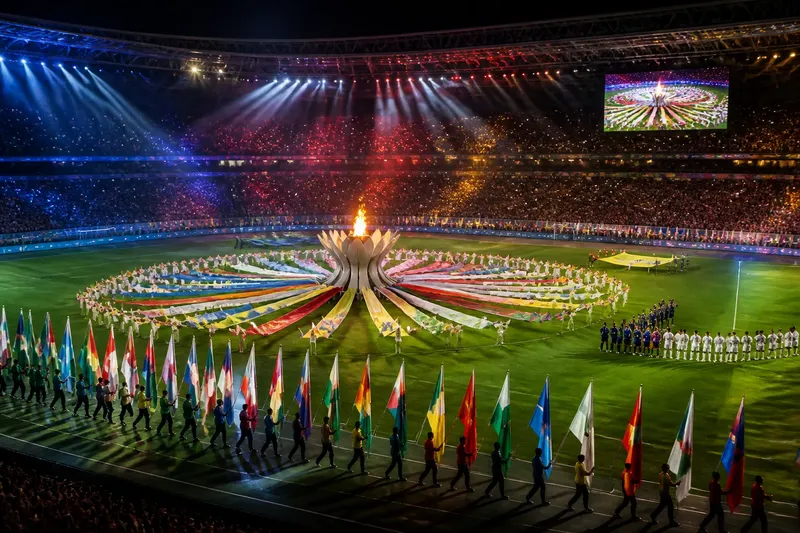
A home crowd sings before kick-off to make the uncertain wait feel shared. The song gives people arriving from different streets, seats and routines a common opening, even before the players begin the match.
That opening is never quite the same from one ground to another. A familiar chorus may welcome newcomers, signal allegiance or simply give restless supporters something to do together; plenty of people will hear it without joining in.
Why does the home crowd sing before kick-off?
The song fills a stretch of time when anticipation is building but the match has not yet supplied anything to react to. A repeated melody and a few recognisable words let a crowd act together without needing a shared conversation.
It can also mark a transition. The journey to the ground and the practical business of finding a seat recede for a moment; attention turns towards the pitch and the people around it. Singing does not make everyone feel the same, but it creates a sound in which different moods can sit side by side.
Listen for how a chant starts. It might come from a supporters’ group, a person in one section, or an announcement that prompts a response. If others pick it up, the song becomes an audible invitation rather than a private performance.
How does a song turn waiting into a ritual?
A ritual is recognisable partly because it can be repeated. Supporters may sing the same lines on entering the ground or as the teams approach, and that familiar sequence helps distinguish match time from an ordinary afternoon.
The point is not that every supporter follows a fixed script. A song can return with a different voice, volume or feeling, depending on the opponent, the occasion and the mood in the stands. What makes it ritual-like is the shared recognition: people know what is happening, even if they choose to take part differently.
Imagine a supporter arriving early after a quiet week, then hearing a familiar chorus rise from the home end while they settle into their seat. They might join the refrain, tap the rhythm on the barrier or simply listen; in each case, the song gives their waiting a clear communal shape.
Who starts the singing, and how does it spread?
There is rarely one reliable director of a whole ground. A supporters’ group may begin a song, but its spread depends on whether other sections recognise it, can hear the words and want to answer.
Some songs travel because the tune is easy to catch or the refrain repeats. Others rely on local references or a history familiar mainly to regulars. A call-and-response chant can make the route especially clear: one section offers a line, another supplies the reply.
Distance, crowd noise and stadium design all shape what carries. A song may be strong in one stand and faint elsewhere, while a drum or a cluster of voices helps keep its rhythm. That unevenness is part of the soundscape, not necessarily a sign that the rest of the crowd has rejected it.
Do all home supporters join in?
No. Some sing throughout, some join only a chorus they know, and others prefer to listen. A supporter might be new to the ground, unsure of the words, saving their voice, or simply more comfortable expressing support in another way.
Participation can include more than singing: clapping, keeping time, answering a line or turning towards the section that started it. Silence can also be deliberate, especially if a crowd is observing a pause or responding to a particular moment. It is better not to treat volume as a measure of loyalty.
For a newcomer, watching for a familiar refrain is an easy way to learn the local pattern without pretending to know every word. Joining when it feels natural is enough; listening is a legitimate way to share the moment, too.
What does the same song mean to different people?
A song can carry several meanings at once. For one supporter, it may recall family trips to the ground; for another, its appeal may be the tune, the humour or the pleasure of hearing a whole stand answer in time.
Meaning also shifts between crowds and occasions. A song adopted at one ground may carry a different local association elsewhere, while a familiar chorus can sound celebratory before one match and more defiant before another. Words that feel affectionate to regulars may leave a visiting supporter puzzled or excluded.
That variety is why a song should not be treated as a single statement from every person in the stand. It is a shared piece of culture with room for private memories, local meanings and disagreement over what belongs in the repertoire.
What do people ask about pre-match singing?
Is there a set time for the home crowd to sing?
There is no universal cue. A song may begin as supporters gather, during the teams’ warm-up or shortly before kick-off, with local custom and the match-day atmosphere shaping its timing.
Why do some songs repeat every match?
Repetition makes a song easy to recognise and gives returning supporters a familiar point of connection. It can also make a simple refrain easier for newcomers to pick up, even if they do not know the verses.
Can someone join in without knowing the words?
Often, yes: a chorus, a clap or a response may be easy to follow after listening once or twice. If the song’s meaning is unclear, listening first is a sensible way to understand its tone.
Does singing mean the crowd agrees about everything?
No. People can share a tune while holding different views about the club, the match or the words being sung. A common voice is a moment of participation, not proof of uniform opinion.
How can a newcomer read the moment?
Notice who begins, whether another section replies, and which lines return. Those small cues reveal whether a song is a long-standing ground tradition, a response to the occasion or an attempt to start something new.
If you are unsure about a chant, you can follow the melody quietly or wait until the refrain comes round again. Pay attention to the people around you, too: the same sound can feel welcoming in one section and more inward-looking in another.
The home crowd sings before kick-off because a match begins socially before it begins on the pitch. A song offers one way to enter that shared time, but it leaves room for different voices, memories and levels of participation.
Next time you arrive early, notice what happens just before the first chorus: who turns to whom, which words catch, and how the sound changes as kick-off approaches. That small interval tells you as much about a crowd’s ritual as the song itself.